

SEO for Fashion Ecommerce: How to Get Your Apparel Brand on Page 1 of Google and AI Search Engines
Think about the last time you bought clothes after searching online. Did you type a rough description into Google? Scroll image results? Or ask ChatGPT to find something close to what you had in mind? However your customers shop, chances are they’re finding apparel brands the same three or four ways — and most fashion Shopify stores are only optimised for one of them.
In 2026, being intentional about fashion ecommerce SEO means keeping your store visible across all of those surfaces — not just classic Google search — and maximising the organic traffic that flows from each one. Here’s what’s changed, and what to fix first.
Plug In SEO fixes meta titles, schema markup, and broken links automatically — across your entire store. No developer needed. Works on any Shopify theme.
Install Plug In SEO →What’s different about SEO for fashion brands in 2026?
The short version: search has changed, and fashion is the category most affected by it. Buyers now have multiple ways to discover products, thanks to the rise of AI in product discovery. SERPs are more crowded than ever — results aren’t just “ten blue links” anymore, they’re a mix of visual shopping grids, AI Overviews, and a handful of stores.
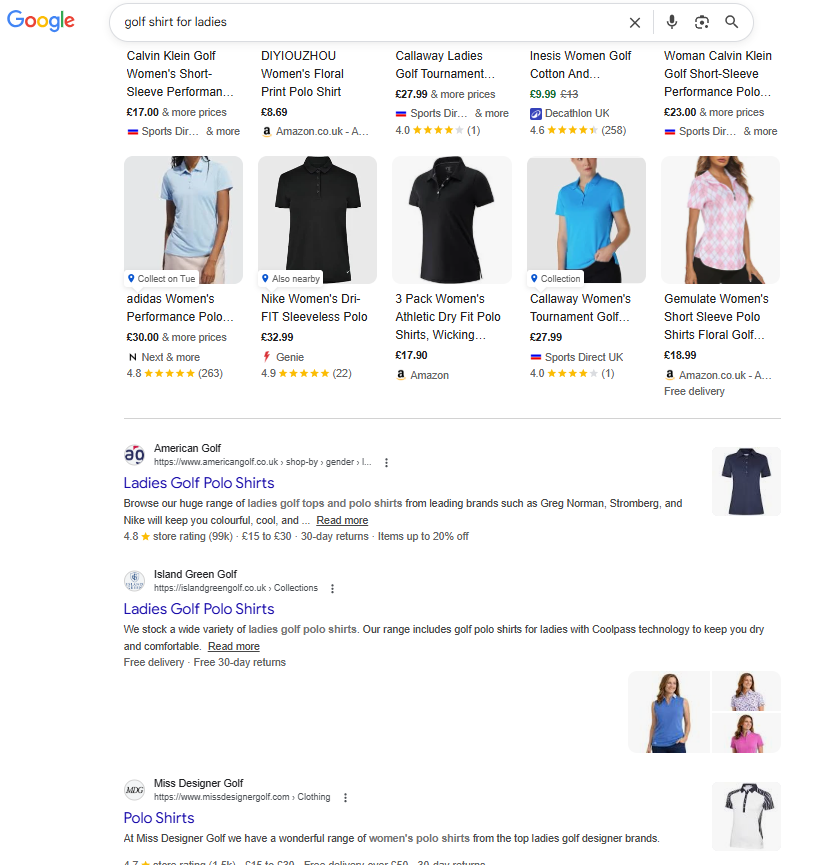
Your fashion ecommerce strategy needs to evolve to put your brand in front of shoppers wherever they’re actually searching. That means building an SEO foundation your brand can rely on for at least a decade, because fashion SEO is unique — it’s driven by aesthetics and trends, not just utility.
- Visual discovery matters. Search engines now “read” images. Optimising product pages with keyword-rich descriptions and alt text is non-negotiable.
- User-generated content carries weight. Unlike standard retail, fashion brands rely heavily on UGC and social signals to prove relevance.
- Duplicate content is the default failure mode. Many clothing brands fail by using thin product descriptions, or by letting a shirt that comes in five colours generate five near-identical pages.
- Seasonality has to be planned for. You should be optimising for “summer linen dresses” in April while you’re already prepping “velvet holiday gowns” for August.
SEO roadmap for fashion brands in 2026
To get your brand noticed organically, work through these steps in order.
Step 1: Optimise for today’s market, not last year’s
Bottom line: Google’s AI Overviews now appear for roughly 14% of shopping queries. Pay attention to the phrases your prospective customers actually use in AI engines, not just classic keyword tools.
Run a general search for products you sell to see what kind of stores get the priority spots. In 2026, if your fashion brand’s online presence lacks high-quality imagery, you won’t appear in “Popular Products” grids. Giant ecommerce sites like Amazon and ASOS tend to dominate broad terms, so use long-tail keywords to niche down and drive higher-intent traffic to your store.
Step 2: Review your site structure and navigation
Bottom line: a clean site structure is the backbone of fashion SEO. Small stores with tight category hierarchies routinely out-rank much bigger competitors on specific, well-targeted searches.
- Hierarchy: map categories logically (e.g., Baby > Dungarees), not by internal merchandising labels.
- Click depth: keep every product within 2–3 clicks of the homepage, and never more than four.
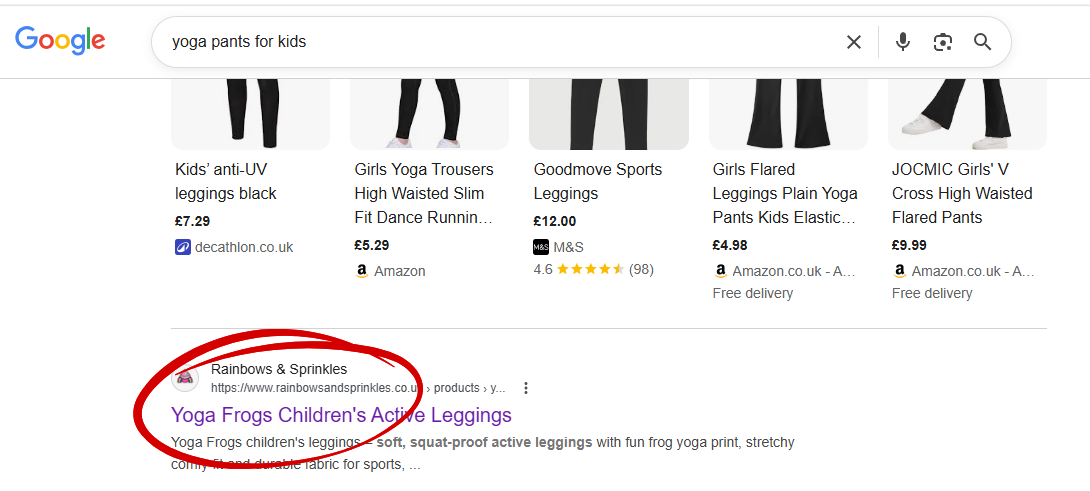
You don’t need to be a big brand for this to work. Rainbows & Sprinkles, a small UK-based children’s clothing store, ranks as the first organic result (after the big marketplaces) for “yoga pants for kids” — on the strength of a clean category structure alone.
Step 3: Find relevant keywords and use them strategically
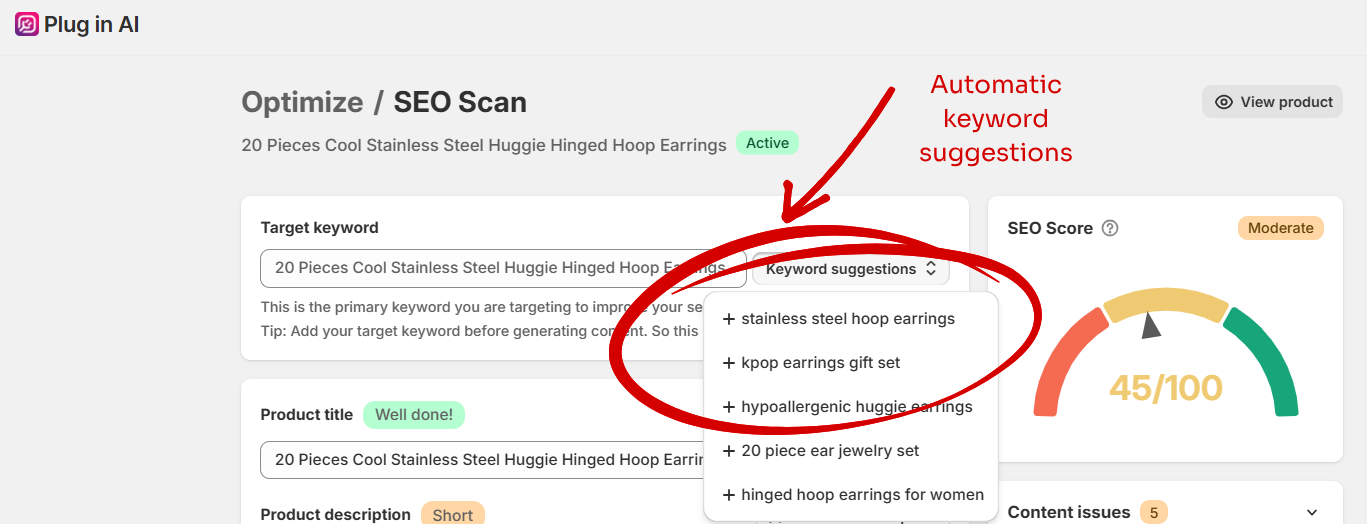
Bottom line: don’t guess. Use keyword research tools like Google Keyword Planner and Plug In AI to discover long-tail keywords across your store, then vet them for intent before you commit.
Plug In AI’s SEO Scan surfaces keyword suggestions automatically for every product, based on what’s actually in your catalogue — no manual research required to get started.
- Primary keywords: “sustainable denim,” “boho chic boutique.”
- Seasonal/trend keywords: “2026 fashion trends,” “dopamine dressing.”
- Long-tail: instead of just “jeans,” target “high-waisted raw denim jeans for petite women.”
Step 4: Pay attention to on-page SEO for fashion ecommerce
Bottom line: every page on your store needs to work as an entry point, not just a stop on the way to checkout.
- Page titles & meta descriptions: craft titles that include relevant keywords but still entice a click — e.g. “Organic Cotton Sundresses | Free Shipping | [Brand Name].”
- H1s & schema: use one H1 per page and implement Product schema so your prices and star ratings can show up directly in Google search.
Step 5: Optimise your store for mobile
Bottom line: since roughly 79% of fashion ecommerce traffic comes from mobile devices, your mobile site is your storefront.
Use a CDN and compress your images so the store loads quickly for the majority of your users — otherwise you lose sales to a slow site before a visitor even sees a product. Get into a weekly routine of checking Google Search Console to see how your store performs, fix broken links, and confirm your sitemap is healthy.
Step 6: Build your content and authority
Bottom line: content is your primary vehicle for turning strangers into paying customers. Search and AI engines now match store content to informational queries — something collection and product pages alone can’t do well.
Don’t sleep on your fashion blog. Posting relevant fashion tips and advice is one of the best ways to show up in front of fashion customers, even as a new apparel brand. It’s not just about Google, either — a single well-targeted blog post can generate real citation volume in ChatGPT and similar AI engines once it’s specific enough to be a clear answer to a question.
Fynony, a newish store, ranks on page 1 for “what to wear to a daddy daughter dance” off the back of a single dedicated guide — ahead of established sites like BabyCenter.
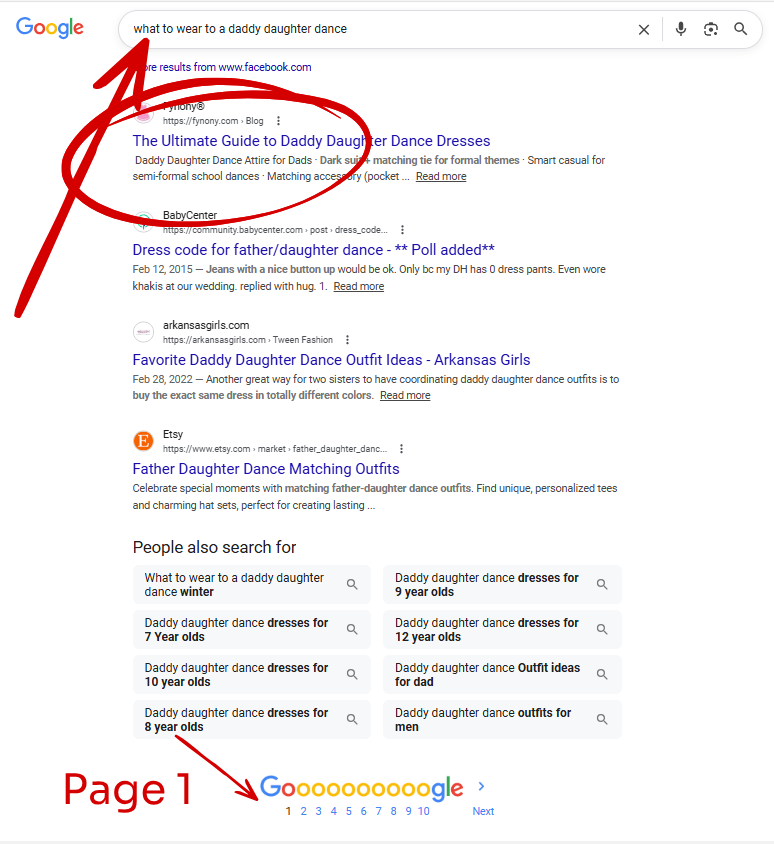
That same post has also picked up 20 ChatGPT citations — proof that a specific, well-answered question travels beyond classic search.

- Internal links matter: use them across your store to guide readers from blog posts directly to the product pages you mention.
- Backlinks build authority: connect with fashion bloggers and magazines for guest posts and contributions using tools like HARO, Featured, or Qwoted.
Step 7: Local SEO for fashion retailers
If you have a physical boutique alongside your Shopify store, start with these three things:
- Claim your Google Business Profile.
- Get listed in fashion directories.
- Keep your NAP (Name, Address, Phone) consistent across the web.
Step 8: Use analytics effectively
Bottom line: you can’t manage what you don’t measure. Use Google Analytics to track SEO performance, and watch for “perception drift” — are search engines associating your brand with “luxury” or “affordable”? Adjust your positioning accordingly.
Where to start today
- Technical: verify robots.txt, improve site speed, and submit your sitemap.
- Content: make sure every product description is unique — no copy-pasting from manufacturers.
- Mobile: test the checkout flow on three different mobile devices.
- Links: audit for orphan pages and add internal links.
- Priority: pick your top 10 “money pages” and use Plug In AI to optimise those product and collection pages first.
Fashion ecommerce SEO isn’t a sprint — it’s a collection of small, smart choices that eventually make you the loudest voice in the room.
Frequently asked questions about fashion ecommerce SEO
How is fashion ecommerce SEO different from general Shopify SEO?
Fashion stores deal with heavier seasonal churn, larger variant catalogues (a single item in five colours and five sizes can create 25 near-duplicate pages), and a much stronger reliance on visual discovery and user-generated content than most other categories. The fundamentals are the same, but the failure points are specific to fashion.
Do AI search engines like ChatGPT actually send traffic to fashion stores?
Yes, but usually to stores with a specific, well-targeted piece of content answering a real question — not to generic product pages. A focused blog post (“best linen shirts for humid summers,” for example) is far more likely to get cited by an AI engine than a homepage or collection page.
How often should I update SEO for seasonal collections?
Plan your seasonal keyword targeting roughly a season ahead — start optimising for “velvet holiday gowns” in August, not December. And never delete a seasonal collection URL outright; redirect it or keep it live with an out-of-season note if it has ranking history.
What’s the fastest SEO win for a new apparel brand?
Fixing thin or duplicate product descriptions and adding descriptive, keyword-rich alt text to product images. Both are common gaps in fashion stores and both are things Plug In SEO and Plug In AI can automate across your whole catalogue.
Should I focus on Google or AI answer engines first?
Google first — a strong technical and content foundation (clean structure, unique descriptions, schema markup) is what AI engines pull from in the first place. Get the fundamentals right and AI visibility tends to follow.
Ready to fix your fashion store’s SEO?
Meta titles, schema markup, broken links, and long-tail keyword discovery — Plug In SEO and Plug In AI handle the technical side automatically across your entire store.
Install Plug In SEO →